Goalkeeper
The only player who may handle the ball inside their own penalty area. Handling is still limited: a deliberate kick from a teammate’s foot cannot be picked up.
U9437
Football Quiz
Link Frames
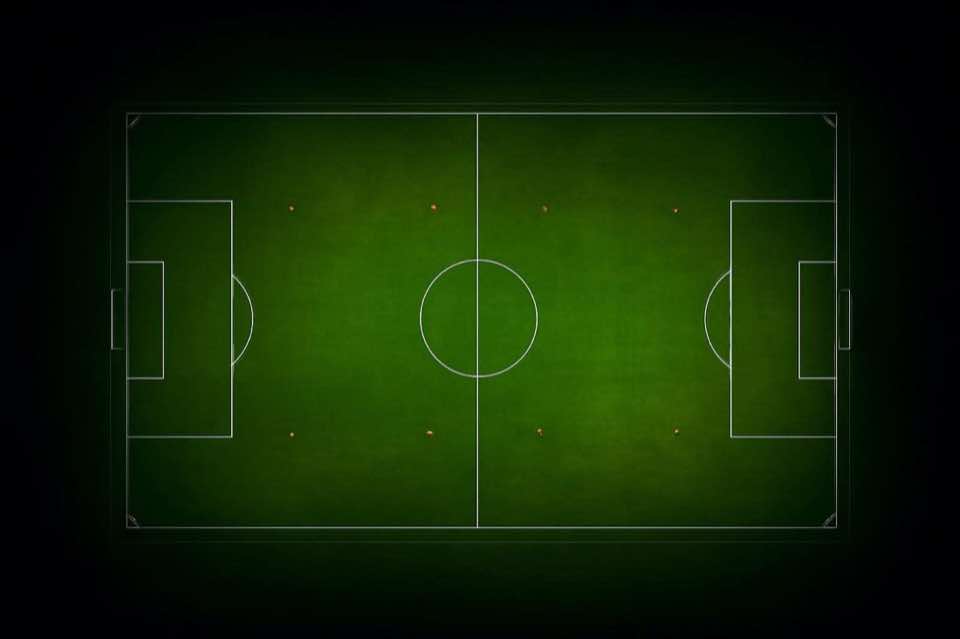
Six frames sit on a small pitch. You choose the order. A correct frame beside another sealed frame becomes a link and lifts momentum. Four seals open the next circuit.

Field atlas
The only player who may handle the ball inside their own penalty area. Handling is still limited: a deliberate kick from a teammate’s foot cannot be picked up.
The pair, or the three, keep the line flat. An offside trap works only when they step together. One defender who stays deep keeps an attacker onside.
A full-back in a back four defends first and overlaps when there is cover. A wing-back in a back three is often the team’s only width.
The player screening the centre-backs. They cut the pass into the feet of a dropping forward and give the centre-backs time to step.
Receives between the opposition midfield and defence, facing the goal. The value is the pocket, not a shirt number printed on a list.
Can stay wide and cross, or tuck into the inside channel so a full-back becomes the widest player. Both choices change the shape without a substitution.
A centre-forward who drops toward midfield and pulls a centre-back out. The space left behind is the cue for a runner from wider or deeper.
The player on the last shoulder. Timing the run matters as much as the finish, because offside is judged when the teammate plays the ball, not when the striker arrives.
Two banks of four and two forwards. The midfield line is four, not a triangle. Width can come from the wide midfielders without a winger ahead of them.
Three forwards: two wide and one central. If the wide players tuck inside, the full-backs have to become the players who hold the touchline.
The 2 is a double pivot in front of the back four. Three players then work between the lines, with a single striker ahead of them.
Three centre-backs hold the line. The wing-backs in the band of five supply almost all of the width, so a tired wing-back is a hole on that flank.
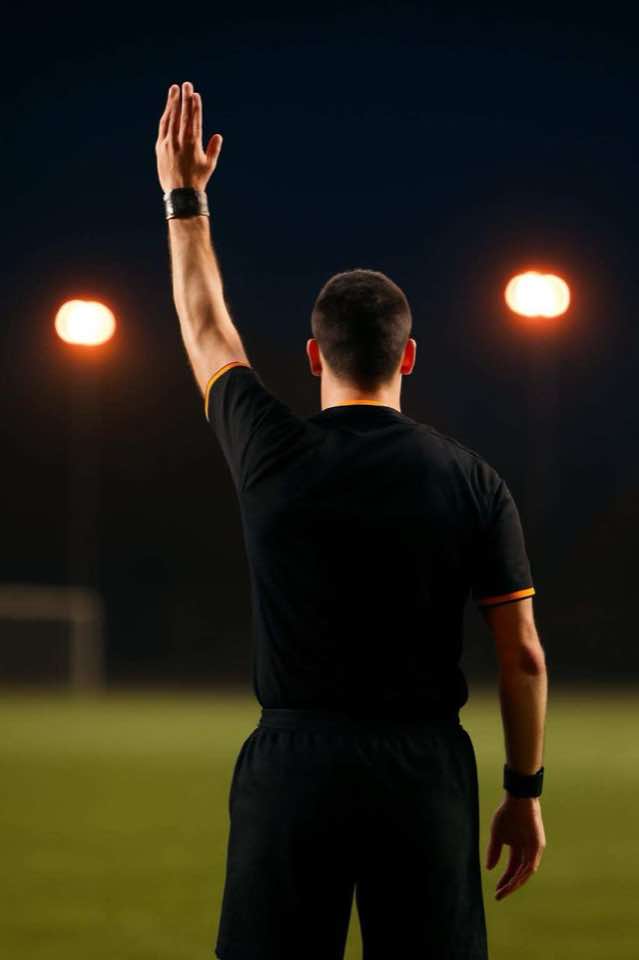
Both arms sweep forward and play continues. The foul is not cancelled. A caution can still be shown at the next stoppage.
One arm stays straight up until a second player touches the ball. A goal cannot be scored directly from this kick against the other team.
The referee points the direction and does not hold the arm up. The kick can go straight into the opponents’ goal.
A clear point to the penalty mark. The kick is taken from the spot, with the other players outside the area and behind the ball.
The assistant, level with the second-last defender, raises the flag straight up. The position was fixed when the teammate played the ball.
A point to the corner arc means the defending side last played the ball over its own goal line. A point back to the goal area means the attacking side did.
A goal, a throw-in, a corner, and a goal kick all wait until the entire ball has crossed the line. Touching the line is still in play, or still short of a goal.
Opponents stay in their own half and at least 9.15 metres from the ball. The ball may be played in any direction once it is kicked and clearly moves.
Both hands, from behind and over the head, with part of each foot on the touchline or on the ground outside it. The thrower faces the field.
The ball is in play when it is kicked and clearly moves. It does not have to leave the penalty area first, so a teammate inside the area may receive it.
Opponents remain at least 9.15 metres from the ball until it is in play. A goal may be scored directly from a corner.
Feinting during the run-up is allowed. Stopping to feint after the run-up is complete is not. A goal from that kick is disallowed, and the restart is an indirect free kick to the defending side.
A player cannot be offside from a goal kick, a throw-in, or a corner. Being level with the second-last opponent is onside. Hands and arms are not counted in the position.
Cabinet

Brief
Each circuit lays out six frames. The cue and the heat are visible before you open one. Hot frames use a shorter clock and swing momentum further.
Four answers sit on the frame card. A correct read seals that square. A miss or a timeout breaks it and drops momentum. Momentum starts at 46 and cannot pass 100.
If the frame you just sealed shares a side with one already sealed, that edge is a link. Each new link adds momentum. The order you choose is part of the read.
Each circuit allows one hold. It freezes the clock on the open frame and does not reveal an answer. Leaving the screen also pauses the clock.
Four correct frames seal it and open the next circuit. Six circuits run from shirt positions to the laws themselves. If momentum hits zero, the remaining frames close.
The full-time card stores the reading, the streak, the links, and the marks on this device. Run a circuit back whenever you want a cleaner sheet.